Thursday, December 5, 2024

Bakkes v California Board of Regents


In the case of Bakke v Regents of the University of California, Allan Bakke, who was a white male, was rejected twice from the University of California’s Davis School of Medicine. Bakke’s grounds for presenting the case was that the University’s admissions programs violated certain protections he was entitled to under the 14th amendment as well as some protections guaranteed in the civil rights act. The university’s admissions departed had two separate admissions processes: one for
regular applicants and another one for minority and disadvantaged students. Sixteen spots in the school’s class of 100 were supposedly set aside for applicants specifically in the special admissions program. Allan Bakke applied to the school twice, rejected both times.

Bakke was a National Merrit Scholar at Coral Gables Senior High School in Coral Gables, Florida. He then was admitted into and attended the University of Minnesota for his undergraduate education. He joined the Naval Reserve Officers Training Corps. He soon after graduated from the University of Minnesota with a 3.51 GPA and then joined the Marine Corps and served for four years, which included a stint in Vietnam where he was commanding officer of an anti-aircraft battery and then appointed the rank of captain, as to go above and beyond fulfilling his ROTC requirements. After what some would describe as an already illustrious career, Bakke then went on to find employment as an engineer at NASA. Now, despite all of this, TWELVE medical schools rejected his application for admission. Bakkes application to UC Davis was late and part of what was called “rolling admission” due to his

mother being ill amongst what could’ve been a litany of reasons. This meant that a lot of seats were already taken up and there were only, but a few seats left in the incoming class. The court’s transcripts reveal that Bakkes addressed his anxieties around his age in his application which he deferred to his ears of sacrifice for the country. Bakke received 468 out of 500 possible points on the admissions committee’s rating scale. In that scale, earlier in the year, a rating of at least 470 would have granted Bakke automatic admission into the school. Bakke scored in the 97th percentile in scientific knowledge, 96th percentile in verbal ability, as well as scoring in the 94th percentile in quantitative analysis. Bakke also scored a 72 on his MCAT (the average regular DAVIS applicant scored a 69 and the average for the special program was a 33). In fact, Mr. Bakkes even took a visit to UC Davis and met with a man by the name of Dr. Theodore West who worked there; Dr. West went on to describe Bakke as, “a well-qualified candidate for admission whose main hardship is the unavoidable fact that he is now 33…” What I’m getting at here is that Bakkes was more than just a well-qualified applicant, he was as qualified as any human being could possibly even hope to be. About two months after his visit, Bakkes received his letter of rejection. 

Bakke was then advised that he could maybe take legal action against the school, which he then did. The case took its time going through different ranks of court, as a case of this magnitude usually does. While there was much drama between the justices, one even being absent for a period to a prostate surgery, the court eventually

ruled on a compromise much like how Professor Smith did in our class. The court struck down the minority admissions program and henceforth, admitted Bakke. However, they did find affirmative action permissible under “some circumstances”. The court also decided to strike the decision made earlier by the California Supreme Court which forbade the university to consider race in the admissions process, a decision which has just been overturned again in a subsequent case.

I believe that my personal opinion on the ruling and potential ruling of this case lies in the very profound and powerful words of Justice and civil rights legend Thurgood Marshall. “I repeat, for next to the last time: the decision in this case depends on whether you consider the action of the Regents as admitting certain students or as excluding certain other students. If you view the program as admitting qualified students who, because of this Nation's sorry history of racial discrimination, have academic records that prevent them from effectively competing for medical school, then this is affirmative action to remove the vestiges of slavery and state imposed segregation by "root and branch." If you view the program as excluding students, it is a program of "quotas" which violates the principle that the "Constitution is color-blind." If only the principle of color-blindness had been accepted by the majority in Plessy in 1896, we would not be faced with this problem in 1978. We must remember, however, that this principle appeared only in the dissent. In the 60 years from Plessy to Brown, ours was a Nation where, by law, individuals could be given "special" treatment based on race.” 

Wednesday, November 13, 2024

Brown V Board of Education (Opening statements from Board)

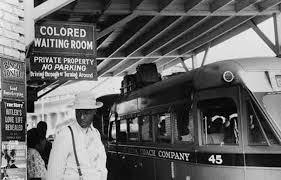
    When describing the separation of blacks and whites on train cars in the case of Plessy V Ferguson, Justice Henry Brown wrote, “We consider the underlying fallacy of the plaintiff’s argument to consist in the assumption that the enforced separation of the two races stamps the colored race with a badge of inferiority. If this be so, it is not by reason of anything found in the act, but solely because the colored race chooses to put that construction upon it." What people fail to realize is that this rule also applies to whites. And you don’t hear them complaining of how this so called “unjust” separation is unconstitutional. 
The “separate but equal doctrine” speaks on the responsibility to ensure equal facilities. If we use our rational minds however we must implore ourselves to question how these equal facilities are obtained. Especially in the case of schools. Most of the funding for public schools is to come from taxpayer dollars. And not just any taxpayers. It’s those who live in the zone that their school is zoned for. It is near, if not impossible, to have equal facilities if we are to use this school of thought. In order for blacks to have “equal facilities” they need to pull their weight and pay their fair share of tax in order to build their schools up just as their white counterparts have. 

    For those that would then make the argument that it’d be impossible for the blacks to generate this amount of income in order to pay the taxes to build their schools up. Let me point out the glaring example we have before us in Tulsa, Oklahoma. What some might call black wall street. This was an area of volatile economic growth in which provided a safe haven for blacks where they could prosper on their OWN MERRIT. Now, the argument against the example just used would be “well the whites destroyed black wall street”. While this is a factual statement, the resolution to this is not to bring the blacks into our schools and infiltrate our way of life, the most reasonable resolution would be to enact protections for black economic growth. What ever happened to the concept of gradualism?
To the ideal that our way of life is just that, OUR WAY OF LIFE. When you combine things that aren’t meant to be combined the only outcome that can take place is chaos for all parties involved. 
If the plaintiff wishes to take legal action in order to ensure his daughter and his community have a fair shot at economic opportunity, maybe he should create some of that economic opportunity himself and stop trying to climb the backs of those who have already put in the work to be able to take hold of such opportunities.


“Separate but equal” should be left up to the very people that it affects in order to uphold it. It is up to these people create their own opportunities and paths to success in order to be
“equally separate”. 
All we, as board of education, are asking for is that we come to a reasonable resolution and not toss up an entire race of fine people’s way of life in order to benefit such a minute number of individuals. That we not throw away decades of tradition. That we not turn our backs on the principles this very country was founded upon. Your honor, please, I beg of you give us our reasonable resolution.

Additional Sources: https://www.oyez.org/cases/1850-1900/83us36https://supreme.justia.com/cases/federal/us/347/483/#tab-opinion-1940809https://www.nps.gov/people/oliver-brown.htm#:~:text=Oliver%20Leon%20Brown%20served%20as,but%20equal'%20has%20no%20place.https://www.oyez.org/cases/1940-1955/347us483Right to Education in North CarolinaUNC School of Governmenthttps://www.sog.unc.edu › files › course_materialsUnderstanding education as a right | Right to Education InitiativeRight to Education Initiative |https://www.right-to-education.org › page › understandi...Dred Scott v. Sandford (1857) - National ArchivesNational Archives (.gov)https://www.archives.gov › milestone-documents › dred...Dred Scott v. SandfordOyezhttps://www.oyez.org › caseshttp://law2.umkc.edu/faculty/projects/ftrials/conlaw/incorp.htmhttps://www.history.com/topics/black-history/plessy-v-ferguson#Separate but Equal - National Museum of American HistoryNational Museum of American Historyhttps://americanhistory.si.edu › history › 1-segregated › s...,  https://www.archives.gov/milestone-documents/brown-v-board-of-education

Thursday, October 24, 2024

The Klan

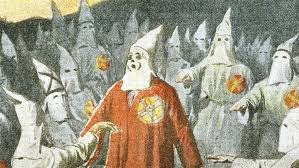
    The Ku Klux Klan started as a social club in Pulaski, Tennessee in the year 1865. In the summer of 1867 there was a meeting that took place where several of the newly cemented Klansmen referred to the Klan as the "Invisible Empire of the South". The Klan's mission was to reverse the new way of life that was established by the reconstruction. Because of this, they targeted any symbols of black autonomy. These symbols were mostly black schools, churches, as well as various black owned businesses. At least 10% of black legislators elected during the this era became victims of violence. Seven of these legislators were even slaughtered. 

By 1870, the Klan had branches in almost each of the southern states. Klan activity especially flourished in areas where blacks were the small minority and whites were an overwhelming majority. The so called "hot spot" for Klan members was in South Carolina especially. In 1871 masked Klansmen attacked the Union County jail in South Carolina and lynched eight of the black prisoners. This is only one example of the countless exhibitions of hate during this time. The Klan vehemently rejected the policies of President Andrew Johnson. One of these policies divided the south into 5 different military districts and required each state to approve the 14th amendment. 

When most people think of the Klan, they think of poor, southern whites. This claim was true for a percentage of Klansmen but not all. No, the Klan consisted of closeted racists. These included but not lim


ited to lawyers, doctors, judges, as well as local law enforcement. In fact, the local law enforcement that weren't even associated with the Klan decided that it'd be in their best interest of they just stayed out of the conflicts of the Klan altogether. This led to a point in time where blacks were subjected to ungodly amounts of hate with not a should to turn to. 

Around 1870 republican state governments were trying to turn to the federal government tp throw them a bone and this the then led to the Ku Klux Klan act of 1871. This act included the right to the suffrage of Black men and also included tighter policies around the shenanigans of the Klan. The act made it a federal offense to prohibit one's rights granted to them by the constitution such as the right to serve on a jury as well as holding public office. The Klan's mass reign of terror came to a grinding halt once Ulysses S. Grant took hold of executive office and used the newly expanding power of the federal government to crush Klan activity in the south. After this white supremacy gradually receded (at least the practice of it in the open).


Wednesday, October 23, 2024

EOTO Reaction/Analysis


During our EOTO I was able to learn about a range of topics during the antebellum era. One of the topics that I had the privilege to learn about was the secession of South Carolina. After
observing some of the facts mentioned in the presentation, I think that it’s fair to say that this momentous occasion was the catalyst for the later events that followed in the both illustrious and animated history of the United States. 

To be able to understand why South Carolina performed the actions that took place it’s important that we take a look at the history of the state a bit. So, with that said, South Carolina was settled in the year 1670 by English settlers and was the eighth state to ratify the U.S. Constitution in 1788. The early economy of the state was very much made up of its agricultural prowess. Famers during this time and in this place heavily relied on the production of slaves by way of the slave trade in order to maximize their margins. By the year 1730 African people made up about two thirds of the colony’s population. 

With all of that said, in order to come to the realization of why South Carolina seeded from the Union, we must also take a look at the political climate during the antebellum era. During this time period, we saw a president take hold of the executive office who was a republican. Now this was before the “party switch” so this particular president, Abraham Lincoln, was against the institution of slavery as it stood. His campaign was largely centered around taking power away from the south and allocating that power so that it was then spread at least semi evenly amongst
the states as a whole. The idea that they would lose power and wealth because of Lincoln’s lack of support for slavery obviously upset the premise of a path forward in the union for South Carolina. So, South Carolina then decides that they’re better off without the union and that they can run the government better as a collective south rather than allowing the northern states, the union, to have a say over what they could and couldn’t do. 

This “we can do it on our own” mindset then spread to the other southern states which then led to their subsequent secessions as well. The Union however did not agree with this obviously, and waged war on this newly formed confederacy. The reason why I truly do believe these specific moments to be pivotal in, not just this time period, but even today’s time, is because the events and mindset still is engrained in modern society. The very policies that the south was so adamant in maintaining affect us as a nation. This way of thought still allows certain
groups of people to be disenfranchised in order for other groups to rise or more importantly, maintain a stronghold of power that is not to be shared with the rest of the general population under any circumstance. This idea, this institution, this stream of thought, presents itself in a way that is almost invisible to the naked eye but if brought into the light with the right context shows a pattern of certain groups of people being used to help other groups climb the so called “social ladder”, if you will, and then pulling out that very ladder the second one group gets to the top.

Gone with the Wind

 Oftentimes when we think of white people in the south during the civil war era, we imagine a life inebriated with sunshine and rainbows. This, however, is not the harsh reality that citizens of the south were forced to live through. We oftentimes see those in the south during this period of time as demagogues and untouchables. After watching Gone with the Wind I was enlightened to what was previously unbeknownst to me, and that was the fact that, no matter what these people who I previously saw in one lens, can be seen completely different if given the opportunity to peak through another lens. 

Observing this film offered up that new perspective. I was previously one of those people whose one-sided way of thinking clouded my ability to distinguish between the actual truth and my previous fallacies that I thought to be the truth regarding the south. The main catalyst in this change of thought was a character by the name of Scarlett O’Hara. Throughout the course of the movie viewers such as myself were privy to an otherwise unseen way of life in the south for white people. I learned that even though wealthy whites in the south may have had a previously “easy” life before the civil war, this was not the case during and after the war. The devastation that hit the south in this movie was something that I had never even heard of before. These were not just people going through tough circumstances, this was instead peoples’ entire way of life being altered or otherwise destroyed. People were displaced, disenfranchised, and otherwise discontinued on numerous levels. 

State V Mann


State V Mann

The concept of race has evolved over time. The terms “white” and “slave” were all used by Europeans in the 1500s and these terms were brought to the U.S. During this time, race was seen as a categorical term rather than one separating different classes of people. This way of thinking evolved over the late 17th century and into the late 18th 

century into a principle much more sinister. The belief amongst many philosophers at the time was that there were natural laws that governed the world and one of these natural laws (unfortunate for blacks) was that those with a lighter pigment of skin were superior to those with a darker pigmentation. This way of thinking made its way to Europe and became the justification for slavery in Europe. Now, the argument that slavery has been around since the don of time can be, and probably will be made by the defense. This claim couldn’t be further from the truth. While slavery existed in ancient societies such as Greece, Rome, and Egypt; it was based on geography or religion NOT on race. In some of these cultures the so called “slaves could even earn a days wage. Around this time, this idea that certain races of HUMAIN BEINGS were lesser than other HUMAIN BEINGS started to take a chokehold of the newly established North American colonies. This “elite” race of humans established that other racial groups were to be considered subhuman and some even savages. 


    What we see now across our beautiful country are debates of whether or not slavery should be legal in the U.S. These debates aren’t because the people voting in favor of abolition actually care about the human beings that just so happen to be slaves. These debates are because the legislators, that we as the people appoint, see all of us, most importantly, the slaves as pawns in a larger more sinister game of chess. And in this game we’re all the same whether certain groups of us want to accept that fact or not IT IS TRUE. Ladies and gentlemen of the jury, we’re not asking that this man be put to death we just want him to be held accountable. This woman that this, excuse my language, scum of a human decided to shoot is somebody’s daughter. This woman is someone’s mother. Ladies and gentlemen of the jury please put your bias’s aside and realize that this woman, no matter what, race, creed, or religion this woman may be a part of, is at the end of the day a fellow human being who was shot by another human being. This woman was almost killed. Ladies and gentlemen of the jury all I’m standing here asking you today is how much is your life worth? All we’re asking for today is FIVE DOLLARS


Thursday, September 19, 2024

Holy Rebellion

Hello, my name is Nat Turner, and I am one of, if not the most important figure in the early abolitionist movement. I was born the son of an unknown father, (many think he ran away), on a small plantation. My mother was a native African who engrained her passion of hatred into me. I learned my ability to read from one of my master’s sons. In the early 1820’s I was sold to a neighboring plantation. Around this time, I became fas


cinated with religion. I knew that I was destined for greatness in the eyes of the Lord, even referring to myself as a chosen child of GOD who was called upon to lead my enslaved race of people out of bondage. My influence was so powerful that those around me began to refer to me as "The Prophet."

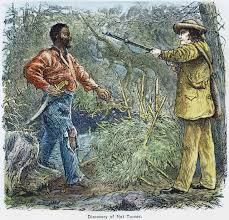
One fateful day in 1831 there was an eclipse of the sun; I knew this was my time to strike. I first enlisted the help of four other slaves. We were forced to abort this attempt however. The second time I enlisted the help of 6 others and killed a slave owning family. After this I felt empowered like I was really carrying out the Lord’s will on his behalf. I then decided to enlist the help of 75 additional slaves. This resulted in the murder of an estimated 57 whites. After what was a long two day killing spree, my revolt was finally brought to a halt. I however, managed to escape. During this time militias and white mobs killed an estimated 160 slaves. State officials thought it’d be fit that I’d stand trial for my actions, even going as far as offering a $500 reward for my capture and subsequent safe return. This amount of


money is the equivalent of $18,091.72 today. I thought that it’d be smart for me to hide out in a nearby cave due to amount of heat that was on me because of the situation. I chose to hide out in a nearby cave. This however proved itself to be a bad idea due to the fact that I was found by a local farmer who didn’t live that far away from the cave. In my jail cell I was interviewed and recorded by a local planter and lawyer. These so called “Confessions of Nat Turner” became a pamphlet short after this time and subsequently the basis for a bestselling book as we as operating as the definitive source for nearly all accounts of the event.

I was hung shortly after these events took place. Nineteen of the thirty men who were arrested for carrying out my plan were convicted and executed. The rest of them, along with 300 free blacks from the area, agreed to be exiled to Liberia in Africa. My rebellion led to a passage of new laws, opened up the door for discussions regard


ing the end of slavery, and forced the Virginia legislature to have some difficult discussions around slavery that they would not have otherwise had. In the short term however, this holy rebellion ended in the implementation of harsher penalties on the activities of both enslaved and free blacks in the state of Virginia. Other slave states soon followed suit as well; with placing restrictions on their rights to travel, preach, and the opportunity to learn how to read and write. People always used to ask me why I did it and the answer remains the same every time, I simply say it was the Lord’s will.

Plessy v Ferguson Reax

  Plessy v Ferguson was a landmark case in which established the so called “ separate but equal ” doctrine. This was important because it p...