Sunday, December 8, 2024

EOTO #3

 During this week’s EOTO presentations I was had the privilege of learning on a number of topics. Some of these topics included that of the Negro Motorist Green Book, Executive Order 9981, as well as learning more about one of my personal heroes, Thurgood Marshall.

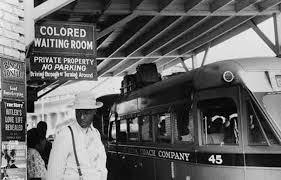
The Negro Motorist Green Book was a travel guide published by a black postal worker named Victor Hugo Green from the years of 1936 to 1966. This book was seen and used as an invaluable resource during this time due to the both reasonable and unreasonable fears of blacks around the potential of having to travel for any kind of reason during this time. The book included various lists of black owned businesses, warnings of potentially dangerous areas for black people, advice for the blacks traveling through certain areas, as well as information about “sundown towns”. The guide was used by middle class black families who were traveling during the period. Highly in part due to the fact that the middle class and high class were the only ones that could afford to travel at the time. The guide was so widely used and counted upon that it began to garner the name, “Bible of Black Travel”. 

The knowledge gathering process for the “Green Book” was one that heavily involved the communities in which were being detailed in the book. Victor Hugo reportedly relied heavily on friends, fellow travelers, and locals of these communities across the U.S. as he was writing his books. Green was somewhat known for encouraging readers to submit recommendations, reports, and other information.People caught wind of this and eventually began offering up information in droves, allowing others to take a peek in what their specific corner of the U.S. was like for them. The Green Book also had what were called regional correspondents. These were people employed by the Green Book and whose job it was to build networks around the country in order to provide accurate and up to date information.

Executive Order 9981 was an executive order handed down by President Harry S. Truman on July 26th, 1948. The aim of the order aimed to create “equality of treatment” in the U.S. Armed Forces. The order meant that all military units must be integrated and that black service members were to have the same opportunities for advancement up the chain of command as their white counterparts. The execution of the order practiced the concept of gradualism, with its contents not truly being completely implemented until the late 50s. Influence upon this act comes, in large part, from blacks’ participation in WWII. Approximately 1.2 million blacks served in the military during the war. While facing numerous barriers they still found a way to stand out for their bravery. Examples of this include the Tuskegee Airmen, the 761st Tank Battalion, as well as the Montford Point Marines

Thurgood Marshall was a trailblazer and one of my personal heroes. Marshall was born into a working class family in Baltimore, Maryland. His dad was a railroad porter and waiter, and his mom was a teacher. Marshall attended Howard School of Law, an HBCU. This was crucial in developing his interest in civil rights and his eventual future career path. Whilst attending Howard, Marshall picked up a mentor by the name of Charles Hamilton Houston. Houston was known as a revolutionary during the time due to his unique approach of using law school as a tool in reshaping the world around him in terms of social change and racial equality. Marshall reportedly had troubles finding work straight out of law school, a problem which most attribute to racial prejudice. Due to this as well as other possible factors, Marshall decided to begin his own private law practice in Baltimore, focusing on helping black clients. In 1938, Marshall began working as a full time employee of the NAACP. Started out as legal counsel, Marshall quickly rose up through the ranks and found himself in the position of the civil rights organization’s chief legal strategist. Before the case that most know Marshall for, Brown v Board, Marshall won other key cases as well such as Murray v Pearson (1936), Missouri ex rel. Gaines v Canada (1938), and Chambers v Florida (1940). In 1967, Marshall was nominated to Supreme Court by then President, Lyndon B. Johnson. Marshall served the court from 1967 to 1991, constantly fighting for the rights of the minority.
 

Saturday, December 7, 2024

Civil Rights Act of 1964

 The Civil Rights Act of 1964 is a law that prohibits, or is supposed to prohibit, discrimination based on race, religion, sex, or national origin. The act specifically highlighted 4 specific areas: employment, public accommodations, federally funded programs, as well as voting rights.

The official verbiage around employment in the act reads as follows, “It shall be an unlawful employment practice for an employer: (1) to fail or refuse to hire or to discharge any individual, or otherwise to discriminate against any individual with respect to his compensation, terms, conditions, or privileges of employment, because of such individual’s race, color, religion, sex, or national origin; or (2) to limit, segregate, or classify his employees or applicants for employment in any way which would deprive or tend to deprive any individual of employment opportunities or otherwise adversely affect his status as an employee, because of such individual’s race, color, religion, sex, or national origin.” This act applies to employers with 15 or more employees, employment agencies, labor organizations, and joint labor management committees.


The next topic that the act addressed was that of public accommodations. The act reads as follows, “all persons shall be entitled to the full and equal enjoyment of the goods, services, facilities, and privileges, advantages, and accommodations of any place of public accommodation, without discrimination or segregation on the ground of race, color, religion, or national origin.” The act defines public accommodations as lodging places, restaurants and lunch counters, gas stations, places of entertainment, and retail establishments. The law was meant to stop discrimination in forms of refusing service, segregating or treating customers differently, and applying different terms or conditions of service to certain patrons. The language used in this section of the act was specifically broad in order to address most types of business that are considered “open to the public”.

Title VI of the act states: “No person in the United States shall, on the ground of race, color, or national origin, be excluded from participation in, be denied the benefits of, or be subjected to discrimination under any program or activity receiving Federal financial assistance.” This applies to any program or activity receiving federal financial assistance making sure that they are to apply equal access and treatment for all individuals. This was a gigantic deal because this part of the act explicitly deals with schools, hospitals, universities, as well as state and local government agencies.

Key verbiage around voting rights in this act goes as follows: “No person acting under color of law shall fail or refuse to permit any person to vote who is entitled to vote under any provision of federal, state, or local law, nor shall any such person willfully fail or refuse to fully count and report such person’s vote.” The section then goes on to state, “Whenever any person has engaged or there are reasonable grounds to believe that any person is about to engage in any act or practice which would deprive any other person is about to engage in any act or practice which would deprive any other person of any right or privilege secured by section 2,000a-1a or 2,000a-2a of this title, the Attorney General may institute for the United States, or in the name of the United States, a civil action in the appropriate district court of the United States…” The reason for this part of the Civil Rights act is to address the prohibition of preventing qualified individuals from voting, the requirement to now count as well as report all legal votes, as well as addressing the power of the Attorney General to take legal action against voting discrimination. Again, just like in the last section, the verbiage in this section of the act is relatively broad deliberately, in order to prevent various forms of voter suppression.

Thursday, December 5, 2024

Reconstruction Video


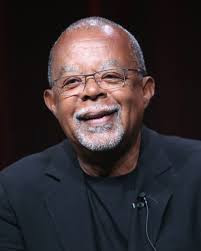
Before the documentary started, we were informed by Professor Smith that “Henry Louis Gates is one of today’s most important public intellectuals.” Throughout the video me, as well as my fellow classmates, were allowed the opportunity to hold a lens looking into the direction of truth and climate of the world during reconstruction. 

For starters, the reconstruction was the period of time almost immediately after the civil war ended. This was a time when blacks sat on the house of representatives. Poor whites and blacks felt connected through common struggle. Black hoped for a new system to be put in place where race wasn’t a barrier of entry for as many opportunities as it was during the time.

Leagues of blacks also just came back from fighting in a war in which they were fighting for a country who didn’t even see feasible giving them the rights which they were quite literally shedding blood for. Robert E. Lee and his followers also saw their defeat in the war as simply, “a loss due to a lack of manpower”. In this strain of thought, they thought that they had committed no wrongs in the eyes of the Lord and that everything should go back to the way it was before the war. So yes, a very multipronged approach to go about healing the nation from various minds during this time.

After we learned of the paradigms of the time, we learned of mothers who were in search of their children after their enslavement ended. I made a connection with a woman we talked about in our other class in the learning community in which we learned of the life of Harriet Jacobs. The connection that I almost immediately drew between Jacobs and the women of the documentary was the search as well as longing for familial connection post slavery. It had occurred to me when hearing stories that these were people who were separated from their families and who had possibly even accepted the fact that they may never even see them again.

I learned that true freedom in this time was measured by land, and how much of it you owned. This is where the Freedman’s Bureau comes into play. The Bureau was put in place to make sure that blacks had a fair opportunity post slavery. A lot of the capital that was given to the program came from land which was acquired from seizures during the war. The term “40 acres and a mule” comes from the Freedman’s Bureau. This was to make right for slavery and the disenfranchisement of blacks from any kind of economic opportunity. So, like many programs aimed to help those in need in this country with not much give back, if any, to the rich and powerful, it failed. The bureau was told by President Johnson to immediately put an end to its reign of rightdoing. So, many of the freed blacks simply refused to leave the land that was given to them as reparations. 

One quote that I heard in the documentary that really stuck with me was, “One can’t expect that racism just be discontinued due to the ending of slavery”. I think this is true, and to piggyback off of it, I’d take it even further and say that if anything it would just exacerbate the issue because now both sides of the spectrum have no structure to practice the racism within.
The confederacy, in many ways, got stronger AFTER the civil war. This is, in so many words, because people romanticized that “way of life”. 

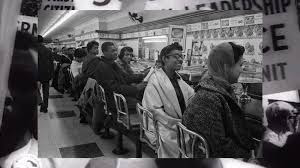
I learned of the “Black Codes”. These were introduced as a way of making sure there was as little change from times of slavery to the era they were in. Blacks were arrested if they didn’t have a job. Some of these blacks were then forced into labor contracts which is quite literally just a legal version of slavery. White people would claim black children because, according to some of the white people, black parents weren’t suitable to take care of their children.

These whites would raise the children with their sole purpose being servants under them. Again, legal slavery. Nothing was really too much better on the legislative side of things either. Once congress reconvened, they allowed for confederate lawmakers to be a part of congress once again, big surprise there. Due to what was seen as a complete abandonment of legal support for blacks, whites began roaming the streets looking for blacks to kidnap, beat, or kill. Blacks were seen at this time as “beyond the law”.

Bakkes v California Board of Regents


In the case of Bakke v Regents of the University of California, Allan Bakke, who was a white male, was rejected twice from the University of California’s Davis School of Medicine. Bakke’s grounds for presenting the case was that the University’s admissions programs violated certain protections he was entitled to under the 14th amendment as well as some protections guaranteed in the civil rights act. The university’s admissions departed had two separate admissions processes: one for
regular applicants and another one for minority and disadvantaged students. Sixteen spots in the school’s class of 100 were supposedly set aside for applicants specifically in the special admissions program. Allan Bakke applied to the school twice, rejected both times.

Bakke was a National Merrit Scholar at Coral Gables Senior High School in Coral Gables, Florida. He then was admitted into and attended the University of Minnesota for his undergraduate education. He joined the Naval Reserve Officers Training Corps. He soon after graduated from the University of Minnesota with a 3.51 GPA and then joined the Marine Corps and served for four years, which included a stint in Vietnam where he was commanding officer of an anti-aircraft battery and then appointed the rank of captain, as to go above and beyond fulfilling his ROTC requirements. After what some would describe as an already illustrious career, Bakke then went on to find employment as an engineer at NASA. Now, despite all of this, TWELVE medical schools rejected his application for admission. Bakkes application to UC Davis was late and part of what was called “rolling admission” due to his

mother being ill amongst what could’ve been a litany of reasons. This meant that a lot of seats were already taken up and there were only, but a few seats left in the incoming class. The court’s transcripts reveal that Bakkes addressed his anxieties around his age in his application which he deferred to his ears of sacrifice for the country. Bakke received 468 out of 500 possible points on the admissions committee’s rating scale. In that scale, earlier in the year, a rating of at least 470 would have granted Bakke automatic admission into the school. Bakke scored in the 97th percentile in scientific knowledge, 96th percentile in verbal ability, as well as scoring in the 94th percentile in quantitative analysis. Bakke also scored a 72 on his MCAT (the average regular DAVIS applicant scored a 69 and the average for the special program was a 33). In fact, Mr. Bakkes even took a visit to UC Davis and met with a man by the name of Dr. Theodore West who worked there; Dr. West went on to describe Bakke as, “a well-qualified candidate for admission whose main hardship is the unavoidable fact that he is now 33…” What I’m getting at here is that Bakkes was more than just a well-qualified applicant, he was as qualified as any human being could possibly even hope to be. About two months after his visit, Bakkes received his letter of rejection. 

Bakke was then advised that he could maybe take legal action against the school, which he then did. The case took its time going through different ranks of court, as a case of this magnitude usually does. While there was much drama between the justices, one even being absent for a period to a prostate surgery, the court eventually

ruled on a compromise much like how Professor Smith did in our class. The court struck down the minority admissions program and henceforth, admitted Bakke. However, they did find affirmative action permissible under “some circumstances”. The court also decided to strike the decision made earlier by the California Supreme Court which forbade the university to consider race in the admissions process, a decision which has just been overturned again in a subsequent case.

I believe that my personal opinion on the ruling and potential ruling of this case lies in the very profound and powerful words of Justice and civil rights legend Thurgood Marshall. “I repeat, for next to the last time: the decision in this case depends on whether you consider the action of the Regents as admitting certain students or as excluding certain other students. If you view the program as admitting qualified students who, because of this Nation's sorry history of racial discrimination, have academic records that prevent them from effectively competing for medical school, then this is affirmative action to remove the vestiges of slavery and state imposed segregation by "root and branch." If you view the program as excluding students, it is a program of "quotas" which violates the principle that the "Constitution is color-blind." If only the principle of color-blindness had been accepted by the majority in Plessy in 1896, we would not be faced with this problem in 1978. We must remember, however, that this principle appeared only in the dissent. In the 60 years from Plessy to Brown, ours was a Nation where, by law, individuals could be given "special" treatment based on race.” 

Wednesday, November 13, 2024

Brown V Board of Education (Opening statements from Board)

    When describing the separation of blacks and whites on train cars in the case of Plessy V Ferguson, Justice Henry Brown wrote, “We consider the underlying fallacy of the plaintiff’s argument to consist in the assumption that the enforced separation of the two races stamps the colored race with a badge of inferiority. If this be so, it is not by reason of anything found in the act, but solely because the colored race chooses to put that construction upon it." What people fail to realize is that this rule also applies to whites. And you don’t hear them complaining of how this so called “unjust” separation is unconstitutional. 
The “separate but equal doctrine” speaks on the responsibility to ensure equal facilities. If we use our rational minds however we must implore ourselves to question how these equal facilities are obtained. Especially in the case of schools. Most of the funding for public schools is to come from taxpayer dollars. And not just any taxpayers. It’s those who live in the zone that their school is zoned for. It is near, if not impossible, to have equal facilities if we are to use this school of thought. In order for blacks to have “equal facilities” they need to pull their weight and pay their fair share of tax in order to build their schools up just as their white counterparts have. 

    For those that would then make the argument that it’d be impossible for the blacks to generate this amount of income in order to pay the taxes to build their schools up. Let me point out the glaring example we have before us in Tulsa, Oklahoma. What some might call black wall street. This was an area of volatile economic growth in which provided a safe haven for blacks where they could prosper on their OWN MERRIT. Now, the argument against the example just used would be “well the whites destroyed black wall street”. While this is a factual statement, the resolution to this is not to bring the blacks into our schools and infiltrate our way of life, the most reasonable resolution would be to enact protections for black economic growth. What ever happened to the concept of gradualism?
To the ideal that our way of life is just that, OUR WAY OF LIFE. When you combine things that aren’t meant to be combined the only outcome that can take place is chaos for all parties involved. 
If the plaintiff wishes to take legal action in order to ensure his daughter and his community have a fair shot at economic opportunity, maybe he should create some of that economic opportunity himself and stop trying to climb the backs of those who have already put in the work to be able to take hold of such opportunities.


“Separate but equal” should be left up to the very people that it affects in order to uphold it. It is up to these people create their own opportunities and paths to success in order to be
“equally separate”. 
All we, as board of education, are asking for is that we come to a reasonable resolution and not toss up an entire race of fine people’s way of life in order to benefit such a minute number of individuals. That we not throw away decades of tradition. That we not turn our backs on the principles this very country was founded upon. Your honor, please, I beg of you give us our reasonable resolution.

Additional Sources: https://www.oyez.org/cases/1850-1900/83us36https://supreme.justia.com/cases/federal/us/347/483/#tab-opinion-1940809https://www.nps.gov/people/oliver-brown.htm#:~:text=Oliver%20Leon%20Brown%20served%20as,but%20equal'%20has%20no%20place.https://www.oyez.org/cases/1940-1955/347us483Right to Education in North CarolinaUNC School of Governmenthttps://www.sog.unc.edu › files › course_materialsUnderstanding education as a right | Right to Education InitiativeRight to Education Initiative |https://www.right-to-education.org › page › understandi...Dred Scott v. Sandford (1857) - National ArchivesNational Archives (.gov)https://www.archives.gov › milestone-documents › dred...Dred Scott v. SandfordOyezhttps://www.oyez.org › caseshttp://law2.umkc.edu/faculty/projects/ftrials/conlaw/incorp.htmhttps://www.history.com/topics/black-history/plessy-v-ferguson#Separate but Equal - National Museum of American HistoryNational Museum of American Historyhttps://americanhistory.si.edu › history › 1-segregated › s...,  https://www.archives.gov/milestone-documents/brown-v-board-of-education

Plessy v Ferguson Reax

  Plessy v Ferguson was a landmark case in which established the so called “ separate but equal ” doctrine. This was important because it p...